

Story-driven video content gives viewers a reason to keep watching. Instead of listing features, it follows someone through a change: a problem, a turning point and a better outcome. A story gives viewers a shape to follow, and it lets them see themselves in your customer’s place.
This guide covers why stories work in video marketing, the techniques that make a story clear, how pictures and sound can tell it together, and how long the video should be and where to share it.
Why Story-Driven Video Content Works
A good story does a few jobs that a list of facts cannot:
- It is easier to remember. A sequence of events with a beginning, middle and end gives the viewer a shape to hold on to.
- It creates feeling. When viewers care about a character, they pay attention to what happens to them, and to the brand that helps.
- It shows the human side of a business. Real situations and relatable people make a company feel approachable.
- It makes the next step feel natural. When the story ends with a better outcome, the call to action reads as the obvious way to get there.
Storytelling Techniques That Strengthen a Video
Start With a Hook
Open with a question, a surprising moment or a problem the viewer recognizes, and save the logo for later. You can check whether the opening works once the video is live: YouTube’s guide to measuring key moments for audience retention explains how the retention graph shows where viewers keep watching and where they leave.
Follow One Clear Arc
Give the video a beginning, a middle and an end. Introduce the situation, show what gets in the way, then show how things change. One main storyline is easier to follow than several side stories, especially in a video of a minute or two.
Use Characters Your Audience Recognizes
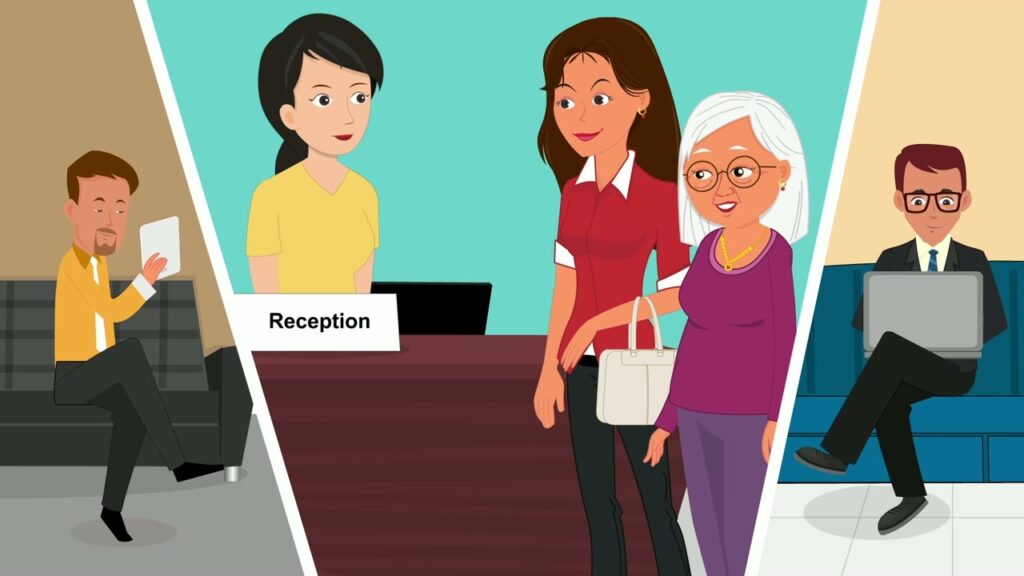
The main character should look and feel like the people you want to reach: a busy parent, a small business owner, a nurse or a new employee. Their goal and their frustration should be the audience’s own. Animation makes it easy to design characters that fit your audience and your brand colours.
Show the Change
The most persuasive part of a story is the difference between the start and the end. Show what the character’s day looks like after the problem is solved, rather than describing it. Keep that outcome realistic, and avoid promises your product or service cannot keep.
Making Pictures and Sound Tell the Same Story

Visuals and audio are strongest when they support each other:
- Visual style: choose a look that suits the story, whether that is 2D animation for people and everyday situations, whiteboard drawing for step-by-step ideas or 3D animation when space and depth matter.
- Pacing: let the edit follow the emotional beats of the story, slowing down for the turning point and moving faster through set-up.
- Music and sound: pick music that matches the mood and use sound effects to draw attention to key moments, without covering the voice.
- Voice-over: a clear, warm narrator can carry the story and the key facts at the same time.
Remember viewers who cannot see or hear every part of the video. Captions help people who are Deaf or hard of hearing, and if part of the story is shown only on screen, it may need to be described. The W3C’s guide to the description of visual information explains when and how to do that. We provide captions and transcripts on request.
Length and Where to Share It
Keep the story as short as it can be while still feeling complete. Our explainer video length data page shows that the explainers in our own catalog of finished client videos ran a median of just under two minutes. Shorter cuts of the same story often work better on social feeds.
- Your website: place the video where visitors decide, such as the homepage or the page for the service it describes.
- Social media: cut short vertical versions that open on the hook. Our social media video production service makes them in several shapes.
- Email and sales: link to the video from newsletters and proposals, using a still from the story as the thumbnail.
Wherever you share it, story-driven video content should open on the hook and end with one clear next step. For more on building emotional connection, see our article on mastering storytelling in video marketing.
Frequently Asked Questions
What is story-driven video content?
It means building a marketing video around a short story, usually a character with a problem who finds a better outcome, instead of a list of features. The product or service is part of the story rather than the whole of it.
Does every business video need a story?
Not every one. A quick tutorial or a product feature demo can be more useful as a plain walkthrough. Stories are most useful when the goal is to make people care, remember you or understand why something matters.
Can a short video still tell a story?
Yes. Even a short video can show a problem, a turning point and a result if it sticks to one character and one idea. The shorter the video, the more each scene has to do.
Is animation good for storytelling?
Animation is well suited to it. You can design characters to match your audience, show places and ideas a camera cannot reach, and keep the look consistent with your brand from scene to scene.
If you would like to turn your message into story-driven video content, we would be glad to help shape the story. We make animated explainers and brand videos for businesses across the US and Canada; our corporate video production page explains how we plan brand videos. Call us at 1-888-590-5796 or request a consultation.


